FRICTION
Force created between two contacting surfaces that tend to rub or slide past
each other. Friction force works opposite in direction to the intended motion.
Factors that Effect Friction Forces
Surface Composition
Surfaces vary in the amount of irregularities that are present in their
surface. The rougher and softer the material the greater the friction
coefficient.
- Coefficient of Friction
- Coefficient of Static Friction (nonmoving friction)
- Highest friction force occurs just before an object begins to move.
- Coefficient of Kinetic Friction (sliding friction)
- Friction force decreases as an object begins to move.
- Coefficient of Kinetic Friction is not effected by increasing velocity.
Normal or Perpendicular Force (pressing force)
- Normal force and friction force are directly related.
- The greater the weight of an object the greater the level of friction
forces.
IMPORTANT NOTE!!
For any given object possessing a specific surface composition and weight,
surface area will not effect the amount of friction force.
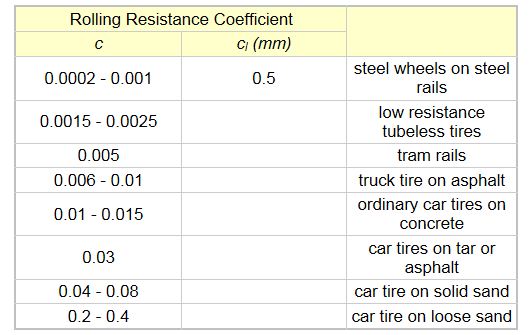
Rolling Friction and Affecting Factors
- Weight, radius, and deformability of the rolling object.
- Deformability of supporting surface
- Friction coefficient between contacting surfaces.
(Examples of
some Coefficients)